

Bandage Scissors: A Comprehensive Guide for Medical and First Aid Use
Release time:
Sep 16,2025
In healthcare and emergency situations, having the right tools can make a critical difference. Bandage scissors, also known as medical scissors or trauma shears, are specifically designed for safely cutting bandages, dressings, tape, and even clothing. While they may look like ordinary scissors, their specialized design makes them indispensable in professional and home first aid. This guide provides a complete overview of bandage scissors, including their features, uses, differences from regular scissors, buying tips, maintenance, usage techniques, and FAQs.
1. What Are Bandage Scissors?
Bandage scissors were originally developed for battlefield medicine, where speed and safety were essential. Unlike standard scissors, they feature a blunt tip and an angled blade, allowing healthcare professionals to cut close to the skin without causing injury.
Today, bandage scissors are widely used in hospitals, nursing care, home first aid kits, sports medicine, and outdoor survival kits, making them a staple in emergency preparedness.
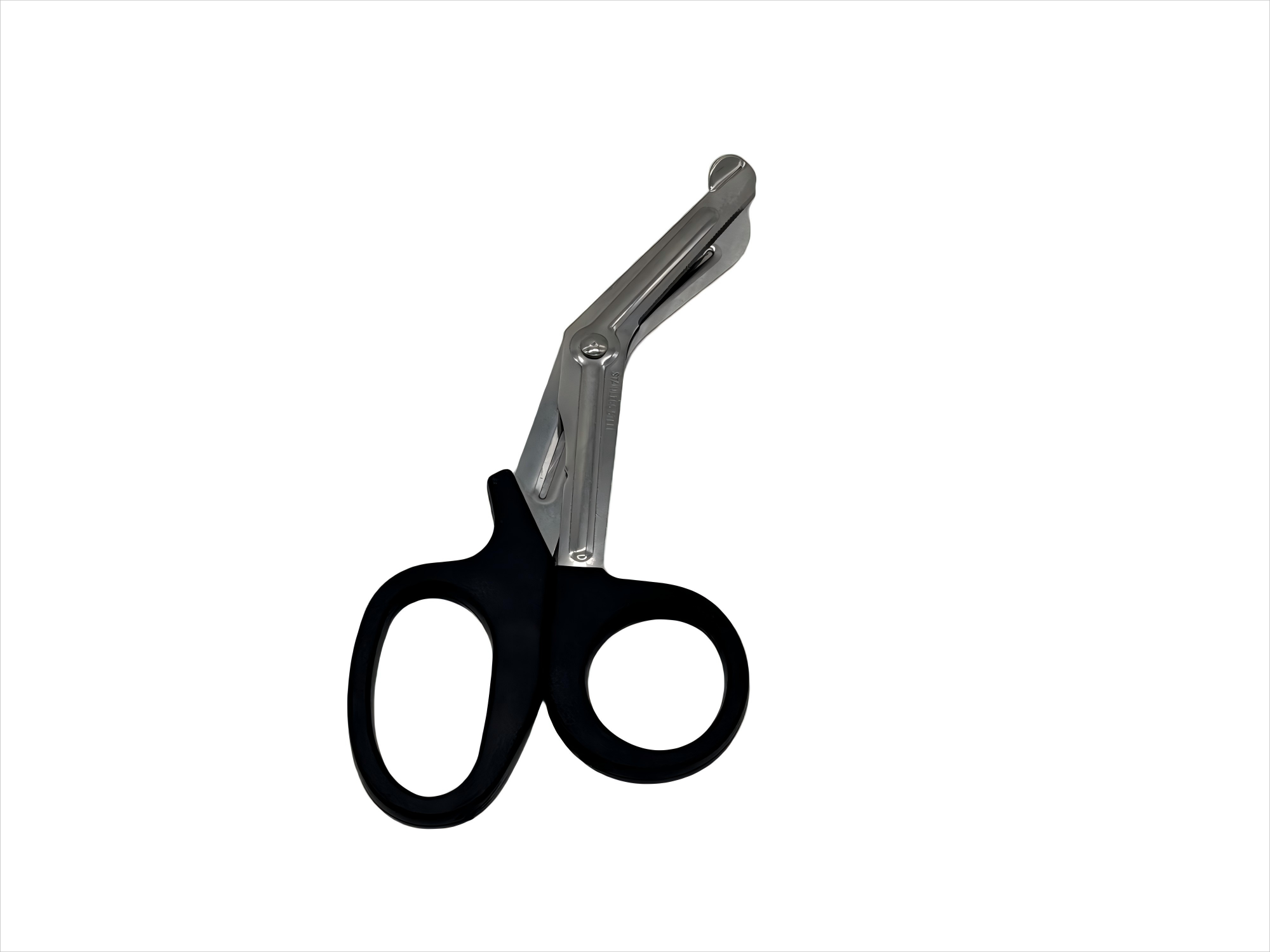
2. Key Features of Bandage Scissors
Blunt Rounded Tip: Protects the patient’s skin during close-cutting.
Angled Blade: Easily slides under bandages or clothing for smooth cutting.
Durable Materials: Typically stainless steel or titanium, sharp, long-lasting, and corrosion-resistant.
Ergonomic Handles: Non-slip and comfortable to hold, reducing fatigue during extended use.
Different Sizes:
14 cm: Compact, ideal for home use and travel first aid kits.
18 cm: Professional size, common in hospitals and clinics.
3. Applications of Bandage Scissors
Bandage scissors are versatile tools, used in many scenarios:
Hospitals and Clinics: Daily removal of gauze, adhesive tape, and bandages.
Emergency Response: Quickly cut clothing to expose wounds in accidents or disasters.
Home Care: Safe for use with children, elderly, or patients.
Sports and Schools: Treat on-field injuries safely and efficiently.
Outdoor Activities: Essential in camping, hiking, or travel first aid kits.
Military and Disaster Relief: Standard equipment for battlefield and disaster medical teams.
4.Bandage Scissors vs. Regular Scissors
Feature | Bandage Scissors | Regular Scissors |
Tip | Blunt and rounded, safe for skin | Sharp and pointed |
Blade Shape | Angled for easy access | Straight, less practical |
Material | Medical-grade stainless steel or titanium | Standard steel |
Usage | First aid, medical, emergency | Everyday cutting tasks |
Safety | High—safe for close skin contact | Low—risk of injury |
Clearly, bandage scissors are the safer and more effective choice in medical and emergency settings.
5. How to Choose the Right Bandage Scissors
Consider the following factors when selecting a pair:
Material: Stainless steel is durable; titanium is lighter and highly corrosion-resistant.
Size:
14 cm: Portable, suitable for home or travel first aid kits.
18 cm: Professional size for hospitals and clinics.
Handles: Ergonomic, non-slip designs improve comfort and control.
Brand & Certification: Choose reputable medical brands with proper certifications.
Price vs. Quality: Affordable is fine, but prioritize safety and durability over cost.
6. Caring for Your Bandage Scissors
Proper care ensures long-term performance:
Clean Immediately: Remove blood, tape, or residue after use.
Disinfect Regularly: Use alcohol wipes or sterilization methods.
Store Dry: Keep in a dry place to prevent rusting.
Check Blades: Replace scissors if blades become dull or damaged.
7. Tips for Safe Use
Insert the blunt tip under the bandage or clothing before cutting.
Cut steadily along the angled blade for smooth, controlled cuts.
For sticky tape, lift the edge slightly before cutting.
Stay calm during emergencies and prioritize patient safety.
8. Frequently Asked Questions (FAQ)
Q: Can I bring bandage scissors on a plane?
Yes, most airlines allow scissors with blades under 6 cm, but always check the airline’s security rules.
Q: What is the difference between bandage scissors and surgical scissors?
Surgical scissors are used for cutting tissue, while bandage scissors are designed for safely removing dressings and clothing.
Q: Should I keep bandage scissors at home?
Absolutely. They are inexpensive, safe, and highly practical in emergencies—essential for any first aid kit.
Q: Can bandage scissors replace regular scissors?
For medical and first aid purposes, yes. For everyday tasks like cutting paper or fabric, use regular scissors to maintain sharpness.
Q: How long do bandage scissors last?
High-quality scissors can last several years with proper care. Replace them if they become dull or damaged.
9. Conclusion
Though small in size, bandage scissors are essential tools in healthcare and emergency response. Their blunt tip ensures safety, angled blade improves efficiency, and durable materials provide reliability.
From hospitals to homes, from professional rescue teams to outdoor enthusiasts, a good pair of bandage scissors is a critical component of any first aid kit. They not only provide practical utility but also represent a commitment to safety and the protection of life.
Latest News